The Ethical Dilemma of Visiting a Long-Neck Village
The Ethical Dilemma of Visiting a Long-Neck Village
Visiting a Karen long-neck village in Northern Thailand isn’t just another stop on a travel itinerary—it’s one of those experiences that stays with you, mostly because it raises more questions than answers. You hear the stories, you see the pictures, and you’re told it’s a “must-see.” But once you walk in, it’s impossible to ignore the complicated reality behind it: refugees turned into tourist attractions, culture intertwined with survival, and a whole lot of ethical grey area that doesn’t fit neatly into right or wrong.
That’s why I wanted to share my own experience—what I saw, what I learned, and what it felt like to meet the women behind the photos.
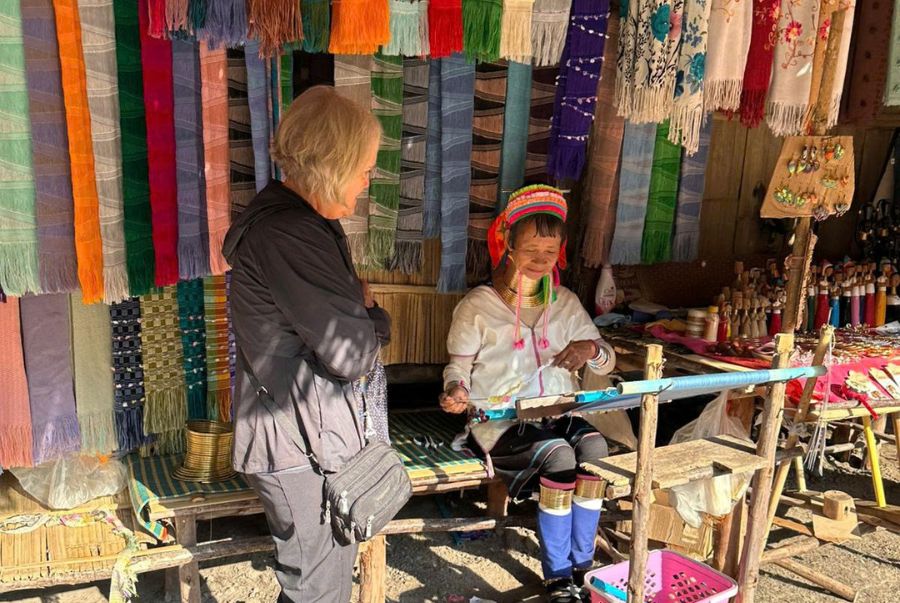
The Karen Long Neck Village in North Thailand
If you have ever visited the north of Thailand then you are well aware of one of the main tourist attractions, which is visiting a hill tribe village. The most popular hill tribe, the Padaung tribe—often referred to as the “Karen long neck village”—is indigenous to the Kayah state in Burma, not Thailand.
A Brief Background on Burma’s Ethnic Conflict
In Burma there are many different ethnic groups. These groups first fought for their independence in 1948 after British colonial rule ended. From my understanding, the lower and upper portions of Burma have been autonomous for much of history and only recently became part of Burma through colonization by the British.
The lower half of Burma has seen carnage with many tribal states fighting the Burmese government, most notably the Karen and Shan states. The fight has moved from political to ethnic, and now the Burmese government is trying to ethnically “cleanse” these areas. Considering that the government has pillaged, raped, tortured, terrorized, and murdered these people, you can understand why they are fleeing into Thailand.
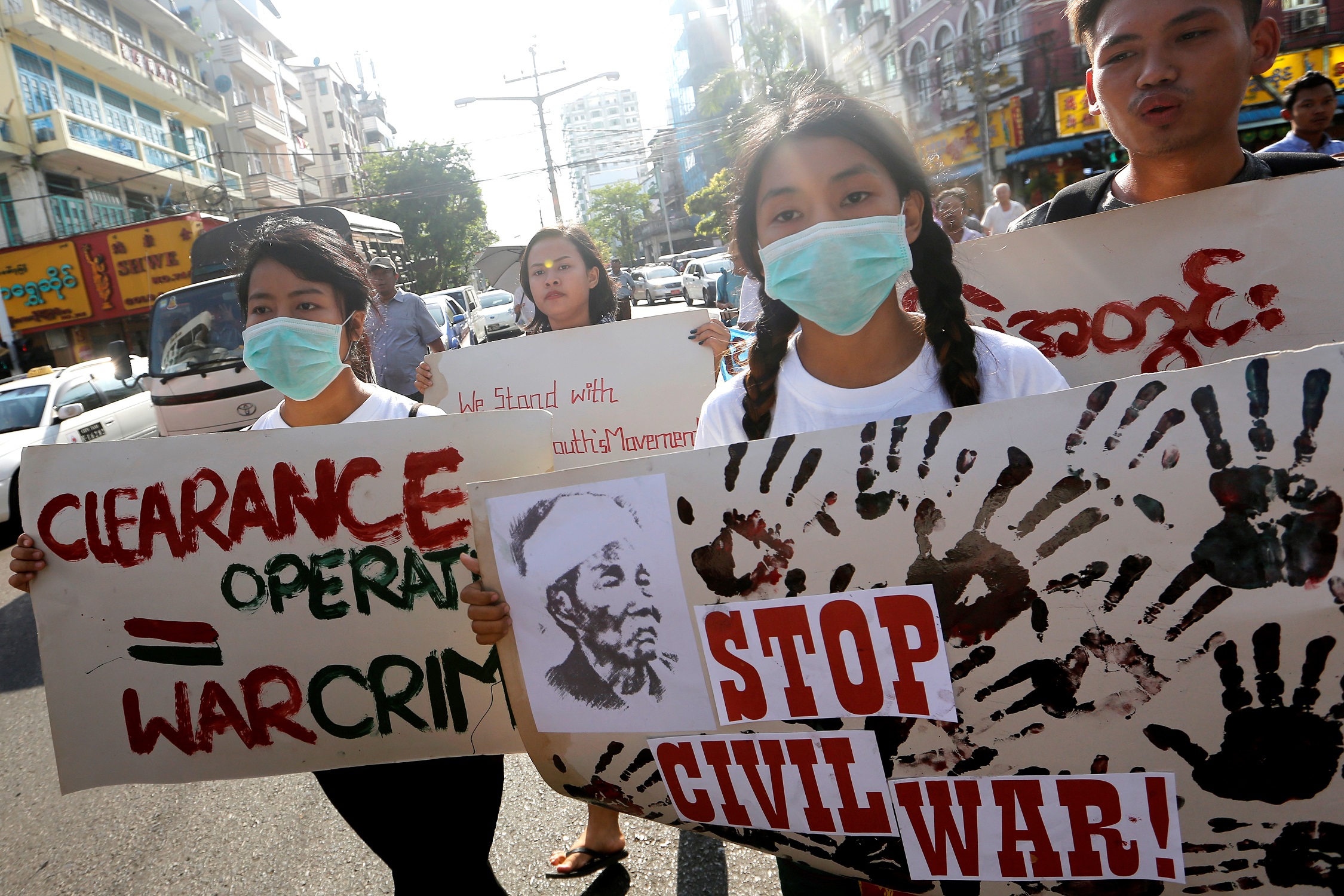
Students take part in a rally demanding peace at the war-torn Kachin State in Yangon, Myanmar May 6, 2018. REUTERS/Ann Wang – RC19493F1880
Human Minesweepers and Forced Displacement
One of the most horrific accounts is that the Burmese military uses these people as human minesweepers. This scene is even depicted in the movie Rambo. In the movie, Rambo kills the soldiers forcing people into the minefields, and we all feel relief—but Rambo isn’t really in the jungles of Burma and nobody is saving them.
Burmese elections were rigged so the military would win, causing more clashes and more refugees fleeing into Thailand in 2010.
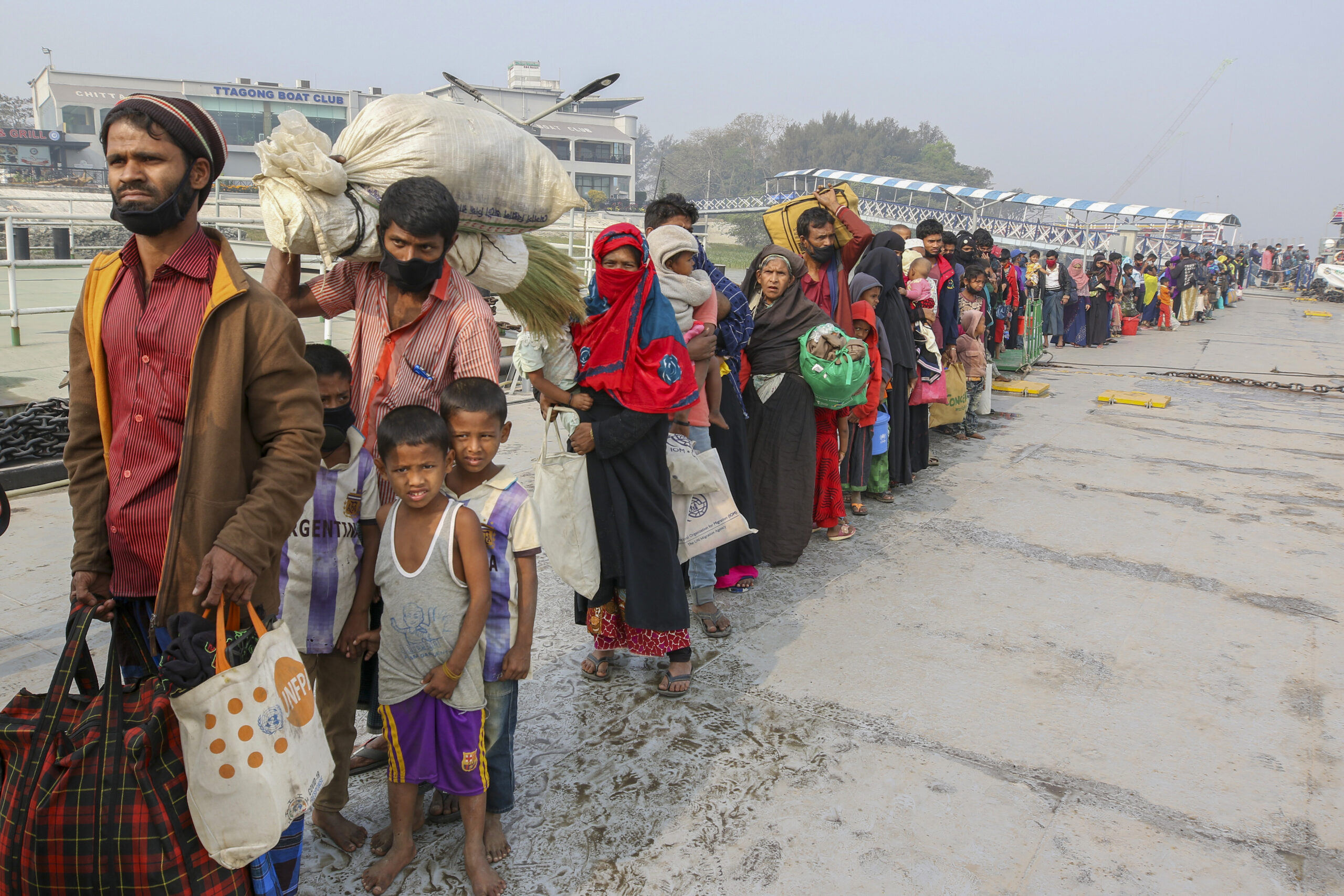
FILE – IN this Feb. 15, 2021, file photo, Rohingya refugees headed to the Bhasan Char island prepare to board navy vessels from the south eastern port city of Chattogram, Bangladesh. The United Nations said Wednesday, Feb. 24, 2021, that a group of Rohingya refugees is adrift in a boat in the Andaman Sea without food or water, and that their families are worried that many may have already died. (AP Photo, File)
The Creation of Thailand’s Tourism Villages
Upon entering Thailand, almost all Burmese refugees are placed in camps along the northwestern border. Foreigners and non-profits rarely get access. A very small subgroup, the Padaung tribe, also fled here. Some women in this tribe wear gold rings around their necks as part of their culture to signify beauty.
In 1985 Thailand created tourism villages, with the Padaung women being the main attraction. These villages are completely fake and set up for tourists. Many people refer to them as “human zoos,” and they are, for the most part.
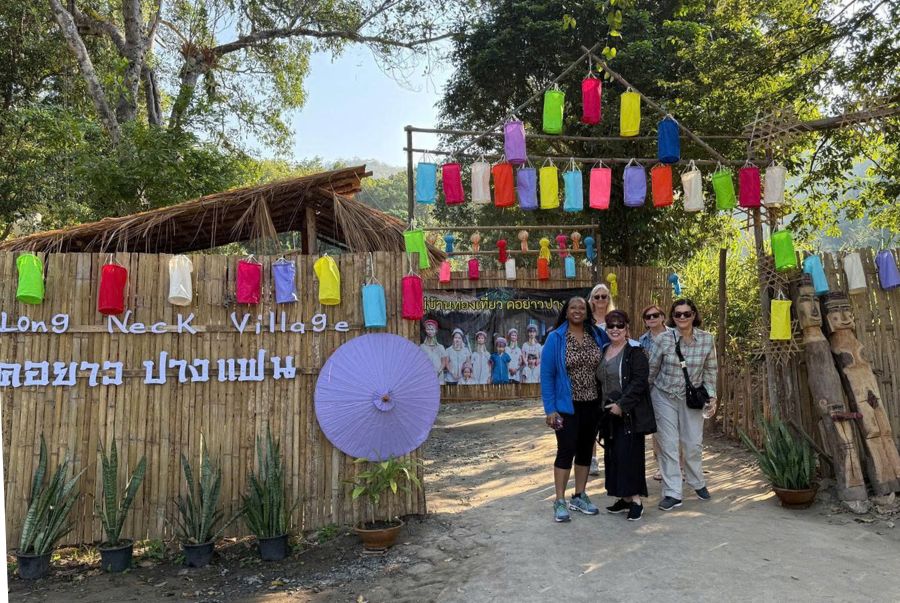
My Visit to a Long Neck Village
I also visited a Karen long neck village in Northern Thailand. I went independently. The one I visited was not popular—I was the only visitor for hours. It was 20 km east of Thaton. I paid the 200-baht entrance fee and went in. If going by scooter or motorcycle, the road is bumpy with lots of potholes, so be careful.
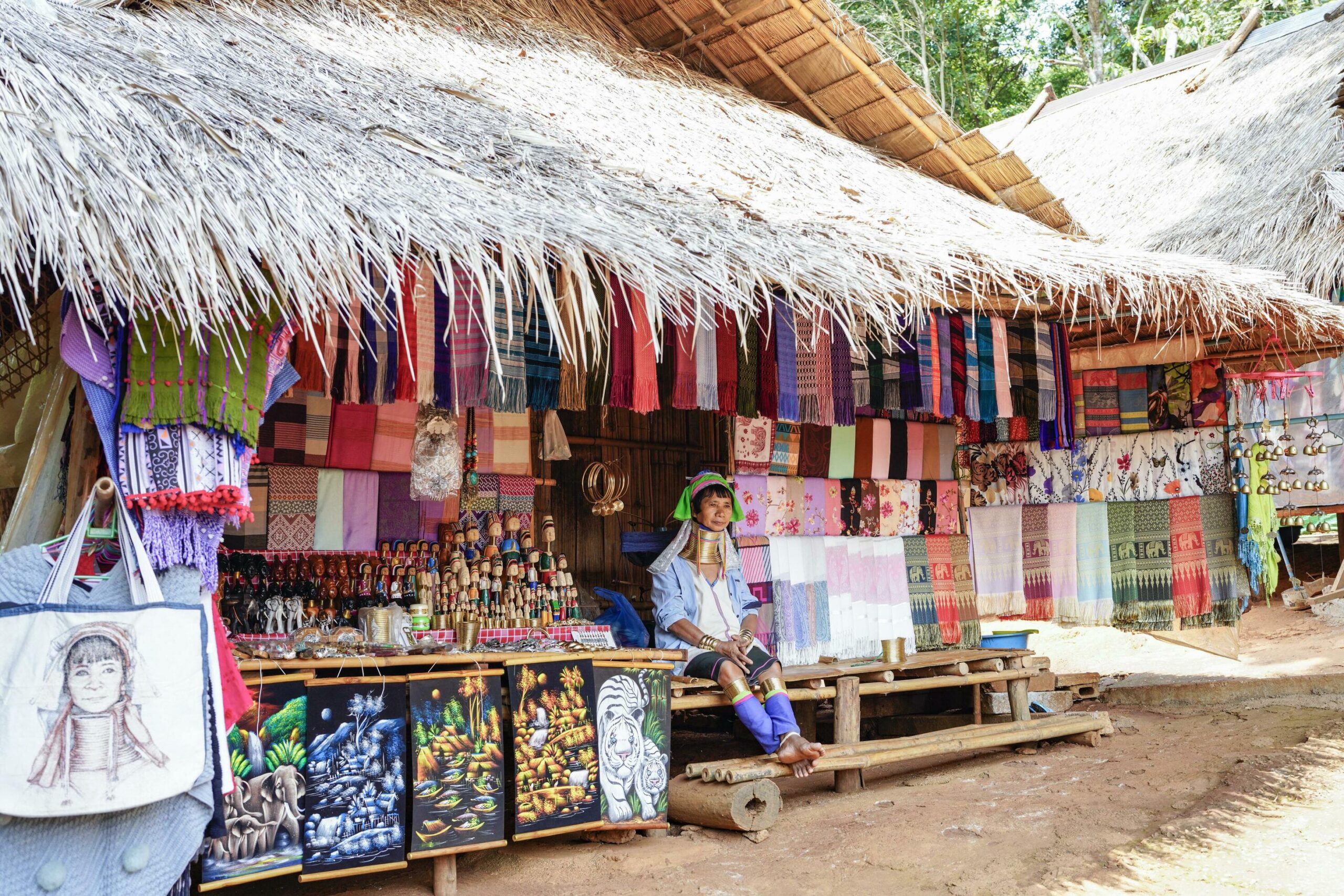
Once inside, I saw bamboo stalls on both sides with women selling crafts. Everyone comes here to take pictures but it felt weird to pull out my camera while they were going about daily life. They didn’t seem keen on having their photos taken when I walked in. I bought two scarves I didn’t really want and walked to the end of the alley.
Meeting a Young Woman From the Village
At the end, a young woman smiled at me. I asked how her day was, not sure if she spoke English. She responded in perfect English. We started talking and after a few minutes I sat next to her. She told me she speaks five languages—French, English, Thai, Burmese, and her native language. She learned most of these just by talking with tourists, which is extremely impressive considering I lived in Korea for four years and can barely make a coherent Korean sentence.
The Truth about Life Inside the Village
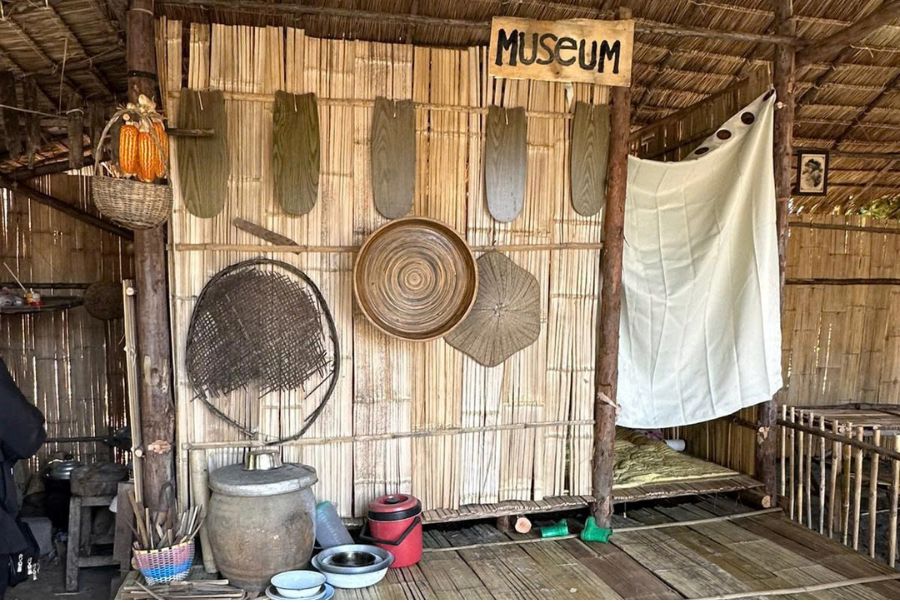
I asked about her daily life. She had lived in the long neck village since she was very young and didn’t remember living anywhere else. The only time they’re allowed to leave is when they’re sick and need a hospital. All villagers get white rice and, if I remember correctly, sugar cane for protein. That’s it.
When asked if most villagers want to return to Burma, she said no—they have a better life here. All the men work on farms. I don’t know if they get paid or get food as compensation.
Economic Refugees and “Prison Villages”
Technically these families are economic refugees. The Thai owners of these villages make a huge profit and don’t want them to leave. Entrance is $8–$16, which is expensive by Thai standards.
There have been reports of some women getting applications approved to be relocated to New Zealand, and the Thai owners stopped the relocation. These women only number a couple hundred, so Thailand is keen on keeping them in these “prison villages.”
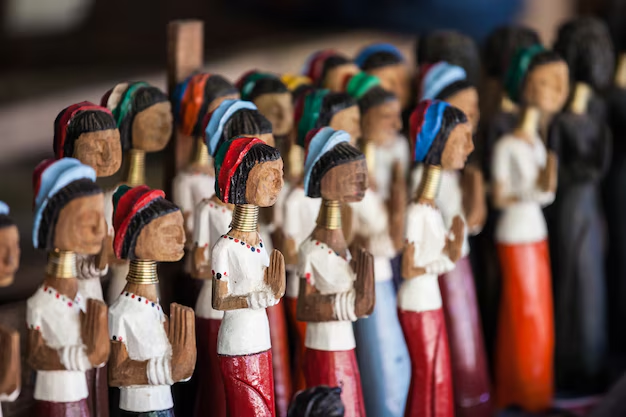
Some Burmese women who don’t wear rings begin wearing them because they get paid more. If they take off their rings, they’re ostracized and told they won’t be paid. This whole tribe has been exploited to the point of no return.
The Sting of Western Guilt
Whenever I travel, I can’t help but feel the sting of Western guilt. Here is a woman who speaks five languages with no formal education, posing for tourists in a “village prison,” yet I’m the one with the money.
Bringing Supplies to the Village
After talking for hours, I thought it would be nice to bring food and amenities. I drove to a convenience store and bought 100 pad Thai, 50 ice creams, 30 milks, 50 toothbrushes, and 50 toothpastes—for only $70. I carried everything back on my scooter through mud and potholes. When I returned, the security guard let me through without questioning the bags. Two other ladies helped me carry everything. We gave the kids ice cream and I said goodbye. The only picture I took was of the children with ice cream. Taking pictures inside just felt wrong.
Should You Visit a Long Neck Village?
Many people go to tiger camps, elephant camps, hill tribe villages, and slum tours knowing the ethical issues but still go out of curiosity.
So the big question is: should you visit a long neck village?
I think it is the lesser of two evils. If these villages didn’t exist, these families would be in the camps with no income. At least here they can earn something. The camps do not sound like easy places to live.
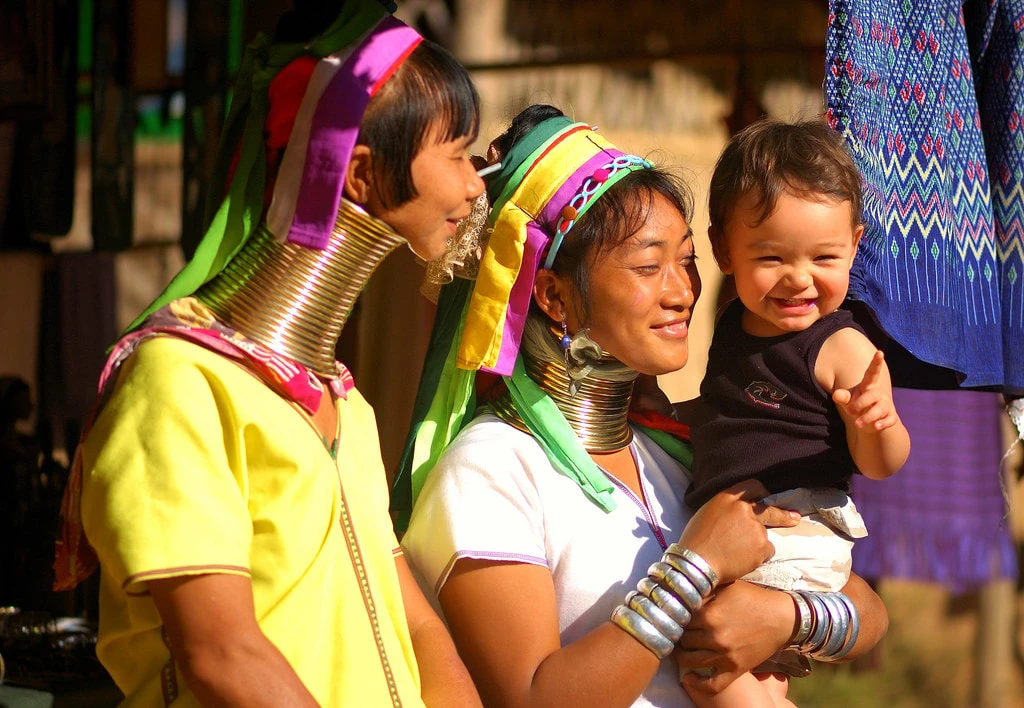
In my opinion, if you want to go, you should. But I think you should follow some simple rules.
Guidelines for Visiting a Long Neck Village
-
If you want to take a picture, buy a handmade item first. Make sure it’s really handmade by the women.
-
Ask before taking pictures. Get to know them. You wouldn’t want someone taking pictures of you at your job without permission.
-
Bring items if you want. Pens, pencils, paper, toothbrushes, toothpaste, food, books. Give them to one person—preferably an elder—to distribute later.
