Tipping in Cuba

By globedrifters Cuba

Tipping in Cuba

Cuba has a modest but very present tipping culture. In restaurants, taxis, and for personal services, all tips are at your discretion. Many locals, especially those working in the service industries, are poorly compensated for their work so tipping helps them earn decent wages. Knowing who and how much to tip in Cuba is not always an easy task. Refer to this blog for your ultimate guide to tipping in Cuba.


Who should I tip in Cuba?

Cubans tend to tip anyone who offers them any kind of service. Cuban people will leave tips for waitresses at restaurants, grocery store cashiers, mechanics, bartenders, taxi drivers, barbers, maids, etc. During your travels in Cuba, we suggest tipping anyone who gave you service that went above and beyond their duties. Also, anyone who helped enhance your experience is a very good candidate for a tip. If you did not receive exemplary service, you are not required to tip.

tipping in cuba, tip anyone who gave great service

You can tip anyone who gives you great service in Cuba.


What currency should I use for tips in Cuba?

A tip in any currency will be appreciated but we recommend that US travelers tip in USD or CUP (the local Cuban currency) while in Cuba. If you’re from another country, tips in EUR are generally accepted if you’re not bringing USD. For more information on what currency to use in Cuba, check out our blog about Exchanging Money in Cuba

Leaving a tip of 10% of the total bill in restaurants and bars is a good rule of thumb.

When tipping in USD, you might want to leave a 1 – 2 USD tip. When eating out, you might consider tipping as a group and taking turns. For example, one person will tip for the group with a 5 or 10 USD bill at a meal. And at the next meal, someone else can leave the tip and so on. 

When tipping in USD, we recommend bringing about $30 – $50 worth in 1/5 USD bills to leave as tips.

When tipping in CUP, the 10% rule also applies, but it’s a bit trickier and involves a little more math. The exchange rate for CUP vs USD may be different in private businesses than in the government exchange offices. Many restaurants will value 1 USD at varying rates so be sure to ask.

You can read in our blog about the currencies in Cuba to better understand how this works. 

If you pay in USD, you’ll more than likely receive change in CUP. Before calculating your tip in CUP, you should ask what the restaurant’s exchange rate is for CUP vs USD. 

From there, the example below explains tipping in CUP:

  • The restaurant values 1 dollar at 180 CUP.
  • Your meal at a local restaurant costs 15 dollars.
  • You pay with a 20-dollar bill. Your change is 900 CUP (5 dollars).
  • You want to leave a tip of 2 dollars in CUP.
  • 2 dollars x 180 CUP = 360 CUP* is the tip in local currency. 

*You can just round up to 400 CUP to make it easy on yourself!

tipping in cuba, you can tip in cup!

It’s up to you in what currency you tip in Cuba… USD, EUR, or CUP.


How much should I tip in Cuba?

How much to tip in Cuba is always up to you, but as mentioned previously, 10% of the total bill is acceptable in a restaurant. You’re always free to leave more if you feel like the service you have received went above and beyond the call of duty. Below is a recommended list of who and how much to tip in Cuba:

  • Taxi drivers: 1 – 2 USD (if very good
  • Luggage porter: 1 – 2 USD per suitcase (keep in mind weight & size, more if very big and heavy)
  • Waiter/Bartender: 10% of the total bill
  • Cleaning ladies: 1 – 2 USD per day
  • Local guide/Trip leader: 5 – 10 USD per day (or in one lump sum at the end of the trip)
  • Bus driver: 2 – 4 USD per day (or in one lump sum at the end of the trip)
tipping in cuba, just tip what you feel right!

Don’t worry about who or how much to tip. Just do what you feel is right and come ready to enjoy the beauty of Cuba!


Tipping in Cuba is really all up to you; there are no set rules. Just tip what you feel is right and deserved. Remember that those who give you service will usually be appreciative of any tip you may give. Another way to help the Cuban people is to bring gifts with you to Cuba due to the lack of access to goods there. Check out our blog about bringing gifts for the Cuban People to learn more about this. Happy travels!


Exchanging Money in Cuba

By globedrifters Cuba

Exchanging Money in Cuba

Exchanging money in Cuba and understanding the country’s currency system can be complex and sometimes tricky to navigate. The Cuban government often makes sudden monetary and economic reforms with little notice. This blog will introduce you to the basics of Cuba’s currency, how to exchange money, and share tips to help you understand Cuba’s financial system.


What is the Currency in Cuba?

Before figuring out how to exchange money in Cuba, it’s important to know a bit about how the currency works. The official currency is the Cuban peso (CUP). You’ll also encounter the moneda libremente convertible (MLC)* in certain places.

The Cuban peso is a closed currency, which means you can’t buy, sell, or trade it outside of Cuba. You won’t be able to legally exchange your money for pesos before your trip; you can only do this once you’re in Cuba.

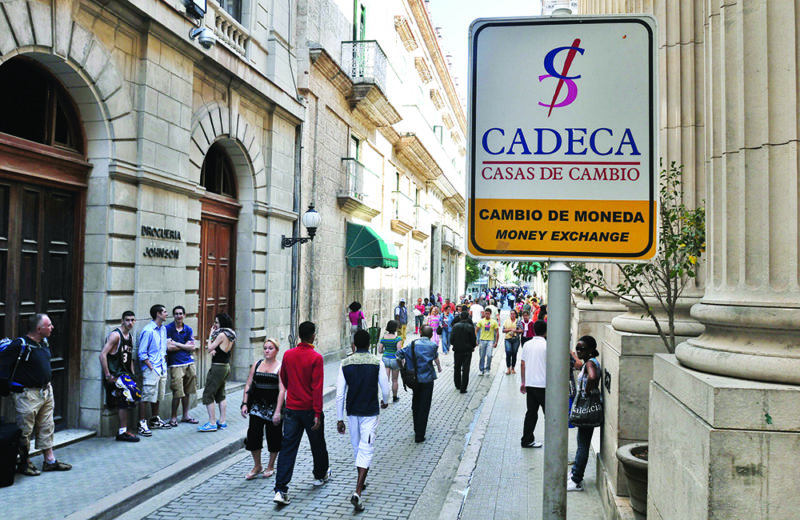
The Cuban government sets official exchange rates and can change them at any time without warning. You can check the government’s latest exchange rates on CADECA’S website, although the site isn’t always up to date.

NOTE: The Cuban convertible peso (CUC) is no longer in circulation!

*MLC stands for moneda libremente convertible. It’s a term the Cuban government uses for foreign currencies, usually US dollars and euros.

Exchange money in Cuba for Cuban pesos (CUP)

Cuban pesos (CUP)

Which Currency Should I Bring to Cuba?

Simply put, we recommend that US travelers bring US dollars (USD) for purchases and spending money in Cuba.

Cuba is currently experiencing significant inflation, which has driven prices in CUP way up. However, many private restaurants, bars, and cafes accept USD. These are the kinds of places where we dine during our 9-day trip to Cuba.

When paying in US dollars, you’ll often receive your change in CUP. You can use these pesos to tip your server, bartender, and others. Be sure to ask each place you visit what exchange rate they’re using for USD to CUP, as private businesses set their own rates. For more guidance on tipping, check out our Tipping in Cuba blog.

If you’re coming from another country than the US, it might be easier for you to bring euros (EUR), British pounds (GBP), or Canadian dollars (CAD). We don’t advise travelers on which specific currency to bring. The best approach is to check exchange rates and fees locally to decide what works best for you.

PRO TIP: If you’re bringing US dollars, it’s best to bring smaller bills like $20s, $10s, and $5s for everyday purchases like meals, drinks, and tips. Avoid bringing too many bills larger than $50, as they are harder to make change.

Exchange money in Cuba to get a cool Cuban beer on a hot Havana day

A cold, refreshing Cuban beer on a hot day!


How can I Exchange Money in Cuba?

CADECA Offices

The most common place to exchange money in Cuba is the CADECA, the official government currency exchange office. You’ll find CADECA offices at the Havana airport as well as in major cities and tourist destinations. The government sets the official rates, so they don’t vary much from one office to another.

As of June 23, 2023, 1 USD = 24 CUP. This rate includes the 8% conversion fee CADECA charges for USD. For other currencies, such as the Euro, Canadian dollar, etc. CADECA charges a 2% conversion fee.

Hotels

Many hotels will exchange money, but we don’t recommend using them because they usually charge higher fees.

Unofficial Money Exchanges 

You’ll also see unofficial money exchanges on the streets. We don’t advise our travelers to use these services. If you choose to exchange money this way, it’s entirely at your own risk.

What to Do With Your CUP at the End of Your Trip?

At the end of your trip, you can usually exchange any remaining CUP back into a foreign currency at the airport. Some CADECA offices in the city may also help you exchange CUP for foreign currency if they have availability. You can also try to spend your leftover pesos. Keep in mind that CADECA in the city or at the airport may set a $100–$300 USD limit on how much you can exchange back from CUP.

Note that only euros and Canadian dollars are accepted after security at the Havana airport. USD will not be accepted.

PRO TIP: As most taxis at the airport will accept USD, we recommend that all travelers on our 9-day trip wait to exchange money in Cuba until you meet with the guide on the evening of Day 1 of the trip. He will offer guidance on exchanging money at the first meeting when you arrive.

Exchange money in Cuba legally at the CADECA

CADECA are legal Cuban government exchange houses where you can exchange currency


Can I use my debit/credit card in Cuba?

In short, no, you can’t use a debit or credit card in Cuba as a US traveler, and you shouldn’t rely on any card as your primary payment method. US debit and credit cards won’t work in Cuba at all.

Cards issued by banks outside the US may work, but there are two common problems:

  1. Card readers often malfunction because they’re outdated or suffer from connectivity issues.

  2. ATMs frequently break down or run out of cash.

Additionally, most private restaurants, bars, casa particulares, and other private businesses don’t have card readers and won’t accept payment by card.

Overall, it’s safest to plan to use cash only during your trip to Cuba.

PRO TIP: You might hear that getting an MLC debit card upon arrival in Cuba is a good idea. We do not recommend this. The Cuban government issues these cards, and they are not accepted everywhere. They are mainly accepted at state-run businesses. If you’re joining our trip to Cuba, we won’t visit any of these places during our trip.


How much money will I need for my Cuba trip?

For travelers on our 9-day trip, we recommend bringing $600–$900 USD in cash. This amount is based on feedback from past travelers and should cover the few meals not included in the trip, plus tips, souvenirs, and any optional activities wish to participate in. Of course, your budget will vary depending on your spending habits and travel style. (Check out our blog about tipping in Cuba for more details about tips.) We strongly advise bringing more money than you think you’ll need, just in case of emergencies.

Many travelers have told us that they found Cuba to be much more expensive than other developing countries. Be prepared to pay prices similar to what you’d expect in Western countries for food and drinks.

Here are some approximate prices to help you budget for your trip to Cuba:

  • Meal at a nice, sit-down restaurant: $20–$30+ USD

  • Cocktail: $5–$10 USD

  • Can of beer: $2–$3 USD

  • Wi-Fi (1-hour card): $1 USD

*These are only approximate prices, and costs may vary depending on location and personal preferences.

For more details on food in Cuba, check out our Food in Cuba blog.

No need to exchange money in Cuba to eat at a paladar. Pay in EUR!

Cuban restaurants: You can purchase food in USD or EUR, and tip in CUP!


Cuba’s currency exchange and monetary system are ever-changing and quite complex at times. By knowing what to expect beforehand, you’ll have a great trip that you’ll never forget. Remember, if you’re traveling on our 9-day trip to Cuba, your guide will be there to help you every step of the way.

If you want to learn more about what to expect in Cuba and get insider advice, be sure to check out our blog Top 10 Cuba Travel Tips. Happy travels!


Cuba – Expect the Unexpected

By globedrifters Cuba

What to Expect in Cuba?

Cuba is trending big time these days – in the news, among travelers, on social media, etc. More and more tourists are flocking to the tiny island before it is “ruined.” (Don’t even get me started on that topic. I’ll save it for another blog post!) I encourage anyone and everyone to go to Cuba because it is a beautiful country with warm and extraordinarily resourceful people. HOWEVER… before going there, please, please, pretty please with sugar on top, open up your mind and, as the title recommends: expect the unexpected! Here are seven “unexpected” things to expect during your travels in Cuba!

cuba expect the unexpected

1.) Breakdowns

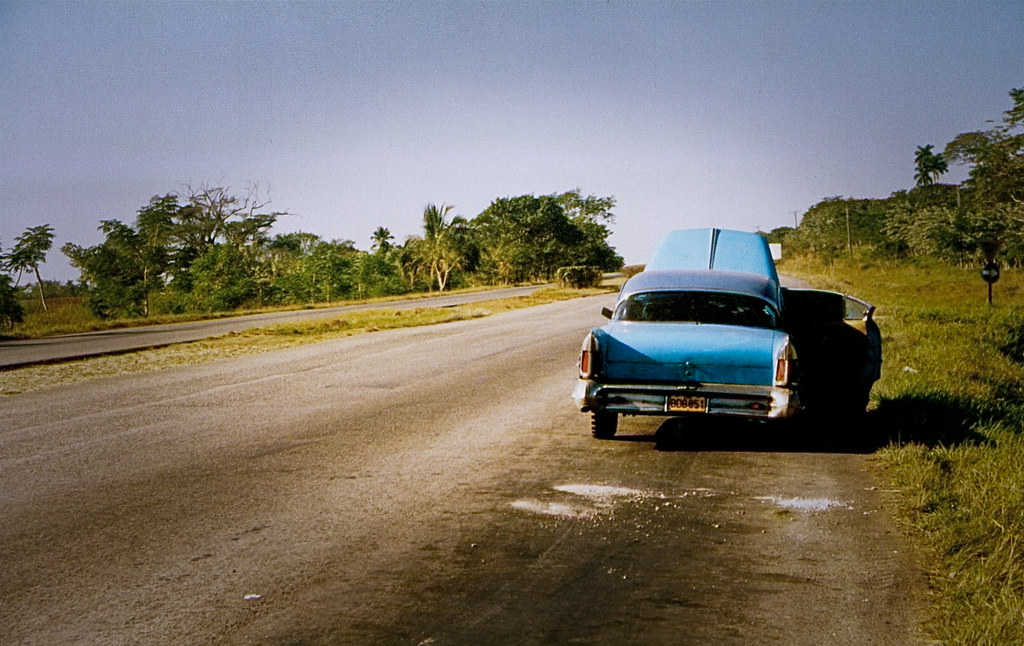
I don’t mean the emotional or mental kind! Cuba is a small and pretty much isolated island, although it is only about 90 miles away from Florida. Because of the embargo still in effect, access to what we consider common tools and parts needed to fix cars, air conditioners, bathrooms, and so on can be very hard to come by. On top of this, appliances tend to be older models, so there is a strong likelihood that something will break down. So when the air conditioner in your accommodation is leaking water, don’t expect it to be fixed at the snap of a finger.

How to deal: Be patient! Kindly speak to a person working at your accommodation about whatever appliance is broken and understand that it may or may not be able to be fixed during your stay.

https://c2.staticflickr.com/4/3405/3270428419_1ee3b2f3ec_b.jpg

Broken down car on the side of the road

2.) Hablamos espanol

Spanish is the official language of Cuba, so naturally, you’ll hear it everywhere during your stay in Cuba. Furthermore, don’t expect to be able to speak English everywhere you go. If you stay in a casa particular, there will most likely be little to no English spoken. If it is spoken, it may be broken and limited in nature. When visiting a store or food/beverage establishment, interaction in English can be rare. Many non–Spanish-speaking tourists rely on gestures as a means of communication.

How to deal: Learn some key Spanish phrases before going. I suggest the standard “Please” and “Thank you” as well as “I would like…,” “How much is it?,” and brushing up on food and numbers before you go. Most guidebooks will have useful phrases in them to help you out.

3.) Spend Those CUCs

While Cuba remains relatively cheap in comparison to other major tourist destinations, it is still more expensive than developing countries that you may have visited. You shouldn’t expect to be making it rain CUCs in the club simply because the cost of goods and services is not as cheap as you might expect. A meal at a restaurant, including a drink and tip, can come to $10 USD or more per person. Cuban cigars, while cheaper than in other countries, can still be pricey, especially the more well-known brands.

How to deal: For our 9-day trip, we recommend that travelers plan on spending around $400–$600 USD. Additionally, we recommend that you bring a few hundred more in case of an emergency situation.

One Cuban peso convertible (CUC) is approximately $0.87 USD

4.) Go Off the Grid

As an American, cell phone and Internet usage are very limited for the time being. Most American cell phones do not get service in Cuba. Even some of those who had purchased international plans and were told that they would work while in Cuba were disappointingly unable to use them. The Internet is also not always a given. In order to use the Internet, you can go to a major tourist hotel and purchase an Internet card. These days, there are newer establishments where you can go to purchase these cards as well. However, you can only use the Wi-Fi in designated public squares in various cities throughout Cuba. Unfortunately, even when purchasing these cards, the connection can be spotty at best.

How to deal: Be mentally prepared not to be able to use the Internet and phone while in Cuba. We always advise travelers not to tell their friends and family that they will be emailing, video chatting, texting, or calling during their travels. Also, try not to let your need to be connected affect your trip. We know it can be hard because we are so used to having lots of telecommunication options at your fingertips, but try to enjoy it! It’s not every day that you have an excuse not to be glued to your phone, tablet, or computer!

Cubans using wifi in a public square

5.) Toilet Toils

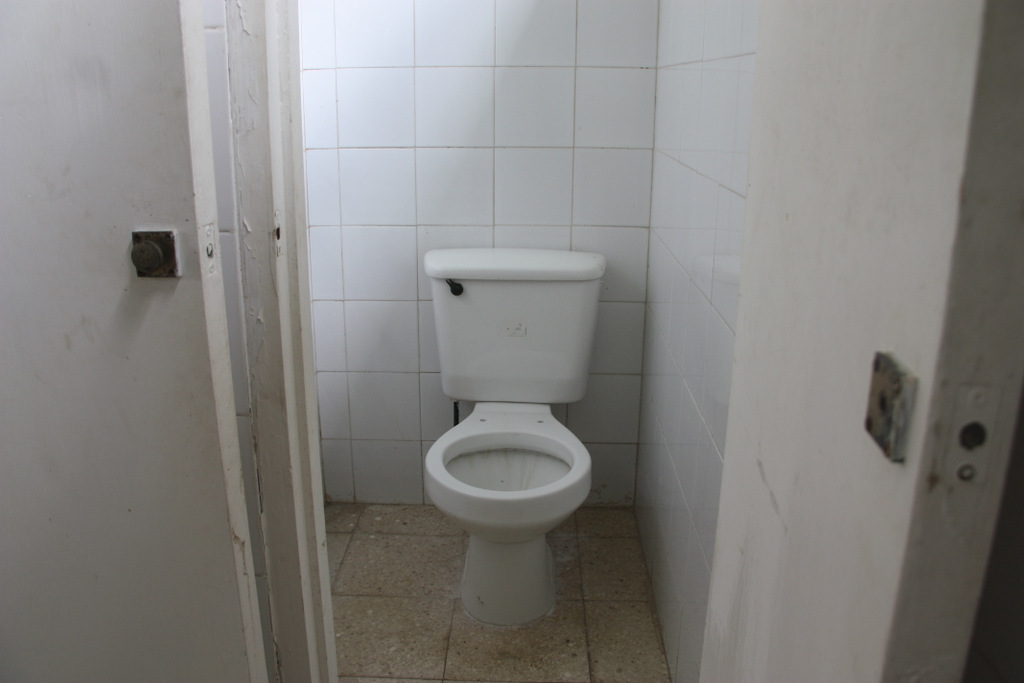
I’ve seen this come up on forums all the time. Toilets in Cuba—especially public ones—often don’t have seats. Ladies: now’s the perfect time to master the art of hovering! Your accommodation will have a seat or lid, but public restrooms usually don’t offer toilet paper. There’s almost always an attendant, so have a little change ready, and you’ll get a small bit of tissue in return. And whatever you do, don’t flush the paper. Cuba’s plumbing is pretty weak sauce, so everything goes in the little waste basket next to the toilet.

How to deal: Bring your own toilet paper. It’ll come in handy when you feel that the amount of tissue you receive from the restroom attendant is too small. Plus, you can use it to wipe off the toilet bowl rim prior to using it.

Cuban toilet without lid or seat

6.) Water Woes

These days, there has been a big influx of travelers to Cuba, and that has put a strain on the infrastructure. The housing and plumbing are just not ready to handle all the tourists flooding the island. This will most likely have an effect on your showering habits. Be prepared for lukewarm or possibly even cold showers and low water pressure. In all of our travels to Cuba, we can count the number of times we have had a hot, high-pressured shower on one hand!

How to deal: The showers may be cold, but on the plus side, the weather will be hot! Shower fast and perhaps split the shower up into two parts. At night, very quickly wash your body. Then in the morning, wash your hair over the sink or tub if it has a detachable shower head. The water will be cold, but it will break up the showering process, and hopefully you won’t feel too chilly after getting clean!

7.) Eat Your Veggies

Some find Cuban food to be delicious; others, not so much. Cuban cuisine tends to be pretty simple in nature. You will almost always have a protein consisting of pork, chicken, beef, or fish that will generally be pan-fried or grilled and lightly seasoned. Your meal will also come with some fresh vegetables that are in season. You may be offered some sliced tomatoes or cucumbers with shredded cabbage and a simple dressing of olive oil with salt and pepper. Also, for the starch, there is almost always rice and beans or just rice served. Occasionally, you will get some boiled potatoes. A lot of people have told me that they have found the food in Cuba to be quite bland or very monotonous.

How to deal: Bring your own hot sauce! No joke! I always have my favorite one constantly on hand at the dinner table whenever I’m dining in Cuba.

Cuban meal: Ropa Vieja (spiced shredded beef w/ veggies), plantains, assorted veggies, black beans & rice!


All of this might seem pretty basic, but you’d be shocked by how many people still gripe about it. Real talk: yes, cold showers, simple meals, and awkward bathrooms aren’t fun, but Cubans deal with this every single day and they survive just fine. If they can handle it for most of their lives, you can handle it for a week. Don’t let the little stuff—because it really is little stuff—mess with your trip. There are way too many awesome things to see and lovely people to meet in Cuba to sweat it. Go with an open mind and have a blast!